Why Crochet Feels So Hard When You’re Still Learning
Hey. Yeah, you. Come sit down for a second.
I’ve been crocheting since I was 13. My mom handed me a hook, showed me the basics, and then essentially said “good luck” and wandered off. What followed was years of wonky edges, uneven tension, and projects that looked like they were made during a low-speed car chase.
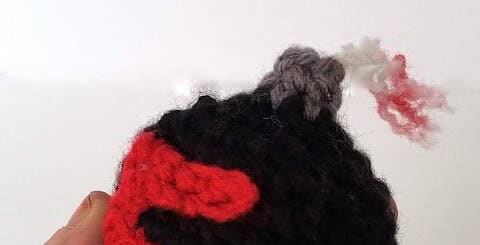
So, I need to show you something. Brace yourself.


That right there? That’s mine. And before you ask… yes, I did that on purpose.
(I didn’t. It’s terrible. I know.) This photo is hilarious to me now because I was so stinking proud of that hat. Now all I can do is fondly tilt my head and murmur “oh honey”.
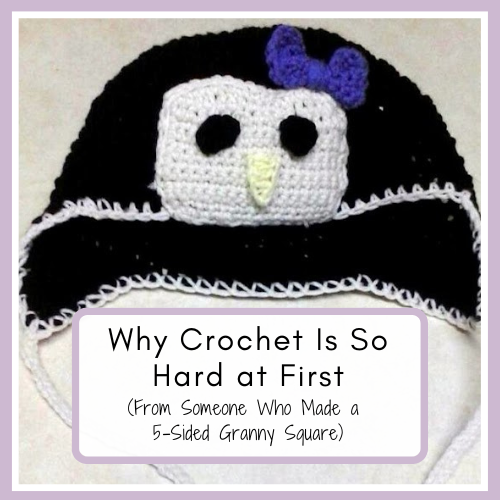
Here is what I was actually trying to make.
This adorable penguin hat from Repeat Crafter Me
(Sarah is a true crochet wizard. Fight me.)

Here’s another disaster. (This makes me cringe visibly) I know what it was supposed to be. But can you guess? Hint: Not a scarf.

A water bottle cover. They look like miniature drunken guitar cases.
By the time I’d taken these photos, I had been crocheting for over 15 years, and these projects? Hot garbage. I truly wish I could find pictures of my very first blanket project I ever completed. It was so terrible the dog ended up using it in her kennel, and then eating it. 0/5 stars. Only recommended for snacks.
But today I want to talk about something bigger than stitches.
(And ff you’re sitting there right now feeling bad, convinced that everyone else picked this up faster than you, I wrote an entire 35-page guide about exactly this spiral. It’s free, it’s honest, & exists because I have been where you are so many times I lost count.)

Heads up: My posts may contain affiliate links! If you buy something through one of those links, you won’t pay a penny more, but I’ll get a small commission, which helps keep the lights on! Thanks!
That Thing is Where You Compare Your Row 3 to Someone’s Row 3,000
Here’s what nobody posts on Instagram: the 83 times they frogged that blanket before the final photo. The tension disasters. The moment at 2am when they realized they’d been crocheting into the wrong loop for six rows and had to rip the whole thing back to the beginning. (Go ahead, ask me how I know)
This piece came a little while later. While it’s not winning awards for photography, the piece is almost okay. The squares are mostly behaving the blocking is decent. My color choices and photography aside, this was a step in the right direction.
Same hands, a little more practice.

Beginner crochet frustration is real, and it’s not because you’re bad at this. It’s because you’re comparing your unedited first draft to someone else’s final, filtered, perfectly-lit masterpiece. The difference between your first draft school essay and Brandon Sanderson’s entire literary universe.
That’s not a fair fight. And your brain knows it, but it does it anyway, because brains are mean, and overly dramatic.
The gap between what you see online and what’s sitting in your lap feels enormous. It feels personal. Like maybe your hands just aren’t built for this, or your brain works wrong, or you missed some secret orientation meeting where they handed out the ability to keep consistent tension.
You didn’t miss anything. There is no meeting. Everyone’s first 10 projects look like they were assembled by a committee of caffeinated squirrels.
Why Crochet Is Hard at First (And Why That’s Not a Personality Flaw)
Let’s get clinical about this for a second.
When you pick up a crochet hook for the first time, you are asking your hands to do something they have never done before. You’re building entirely new muscle memory from scratch. Your fingers don’t know where to go yet. Your tension is all over the place because your grip changes every 30 seconds without you noticing.
That’s not failure. That’s your nervous system going “wait, what are we doing now?” And you answering with a shrug, a sip of Diet Coke and mumbling something about “quiet I’m on row fourteen”.
Learning crochet is hard because it requires your hands, your eyes, and your brain to coordinate in a way they’ve literally never had to before. Reading a pattern while counting stitches while maintaining tension while remembering which loop to go through, while listening to a toddler throw a tantrum and mentally keeping track of the stuff in the slow cooker… that’s a lot of simultaneous processing. Especially when you’re new and none of it is automatic yet.
Your hands are basically drunk toddlers right now. They’ll sober up. Give them a minute. (And some protein)
(And if you’re struggling with specific things like counting your stitches, common beginner mistakes, or that terrifying magic ring that patterns love to throw at you on page one without any explanations… I’ve got posts that break each of those down without making you feel like an idiot.)
The Stuff Nobody Warns You About in the First 6 Months
Here’s a short list of things that happen to literally every new crocheter that nobody bothers to mention:
- Your tension will be wildly inconsistent. One end of your scarf will be tight enough to stop bullets and the other end will be loose enough to fit a watermelon through. (Again, ask me how I know) This evens out over time. Not overnight, not in a week, but it does even out. The only fix is to keep making things.
- You will lose count. Constantly. You will lose count so often you will start to wonder if numbers are even a real thing or just a social construct. You’ll be sitting there, counting “…14, 15, 16…” and then your phone buzzes or someone talks to you or you sneeze and suddenly you’re back at “…wait, was that 12 or 15?” You will briefly consider attending a kindergarten class just to brush up on how to count. This is not a you problem. This is a human-with-a-brain problem. Stitch markers exist for this exact reason.
- Your first blanket will be a trapezoid. No, I don’t care if you think you’re making a rectangle. It will be a trapezoid. If it comes out rectangular on the first try, you’re either lying or a witch. (I’m leaning witch) Most of us end up with something that started at 42 stitches wide and somehow ended at 38. Or 47. How? Nobody knows, and we don’t have the funding for research.
The Part That Feels Personal (But Isn’t)
- Frogging will make you want to cry. It is the single most soul destroying depressing activity you will ever do. Pulling out rows of work because you messed up five rows ago is genuinely painful. But it’s also how you learn to catch mistakes earlier the next time. Every crocheter on the planet, from beginners to people who’ve been hooking for 40 years, has to frog. It’s not punishment. It’s just part of the process.
- (I currently have 12 WIP’s that need some degree of frogging or another. I am waiting until I have the mental health available to give them the attention they require.)
- Patterns assume you already know things you don’t. It’s rude. They’ll casually say “dc in next 3 sts” like you were born knowing what that means, or have a PhD in yarn. You weren’t and you don’t. If pattern language feels like reading a foreign language, you’re not behind… the pattern just has terrible communication skills. (I keep a stitch library on this site for exactly that reason.)
The Part That Actually Matters
Okay so here’s the thing I actually want to say with this whole post.
Your crochet does not have to be good.
I mean it. I’ll say that again for the people in the back crying into their frogged project.
Your crochet does not have to be good.
There is something that happens when you sit down with a hook and yarn and your hands start moving in that repetitive rhythm. Your brain quiets down. Not all the way especially if you have ADHD, (“hi, hello, I’m the problem, it’s me”…anyone else hear a Taylor Swift song from that just now?) but enough. Enough to notice that you’ve been breathing a little slower. Enough to realize that for the last 20 minutes you weren’t thinking about your inbox, or your to-do list, or whatever thing has been eating you alive this week.
The mental health benefits of crochet are real and they’re documented and they have nothing to do with whether your finished object belongs in a magazine. Whether you picked up a hook for anxiety, for stress, or just because your hands needed a job… it all counts. The repetitive motion. The focus required. The fact that you can sit on your couch at 10pm with something terrible on Netflix and make a thing that didn’t exist before you picked up that hook.
That’s the whole point. Journey before destination. (IYKYK)
Not the perfect edges. The Instagram photo doesn’t matter either. Not the compliments from people who don’t crochet and therefore have no idea what they’re even looking at.
The point is what happens inside your head while your hands are busy.

Same hands, same brain, more experience
So Where Does That Leave You?
Right here. With your wonky stitches and your weird tension and your half-finished project that’s been sitting in a bag for two weeks because you got frustrated and walked away. (It’s in time out. Where it deserves to be. It’s fine)
It’s okay to walk away and pick it back up when you’re ready. Or don’t. Start something new. Frog the whole thing and try again. There’s no timeline for this. There’s no test. Nobody is grading your single crochet stitches.
The only thing I’d ask is that you stop telling yourself you’re “bad” at this. You’re new at this. Those are two wildly different things.
(And if you want someone in your corner while you figure it out, I wrote a whole guide for that. It’s the thing I wish someone had handed me when I was sitting on my couch at 2am wondering why my granny square had five sides and one was lowkey waving at me.)
-

- Crochet LEGO Blanket

-

- The Harlow Pillow

-

- Crochet Owl Hat

Keep going. It gets better. I promise it gets fun.