

When I first started crocheting and a pattern told me to “count your stitches,” I had no idea what that meant.
Count them how? They all look the same. Where does one stitch end and another begin? Why is this so confusing?
There’s a lot of confusion when you’re getting started with beginner crochet patterns and terms. What is a stitch? What the heck is frogging anyway? Why are there so many different kinds of crochet hooks?
I felt like I was swimming in constant confusion and considered giving up. But I enjoyed the therapeutic nature of crocheting, even when my projects turned out awful. So I kept going.
Turns out, counting stitches isn’t actually that hard once you know what you’re looking for. Your brain just needs to learn how to see stitches as individual units instead of one big blob of fabric.
Here’s how to count stitches in single crochet, half double crochet, and double crochet – the three most common stitches you’ll use.
Get my free beginner crochet guide (for when your stitches look wrong and you’re convinced you’re the problem – you’re not):
How to Easily Count Your Crochet Stitches
Heads up: My posts may contain affiliate links! If you buy something through one of those links, you won’t pay a penny more, but I’ll get a small commission, which helps keep the lights on! Thanks!
Let’s start counting crochet stitches in single crochet. As you may or may not recall from Rookies Learn to Crochet Lesson #2, a new row starts with a chain 1 and turn your project.
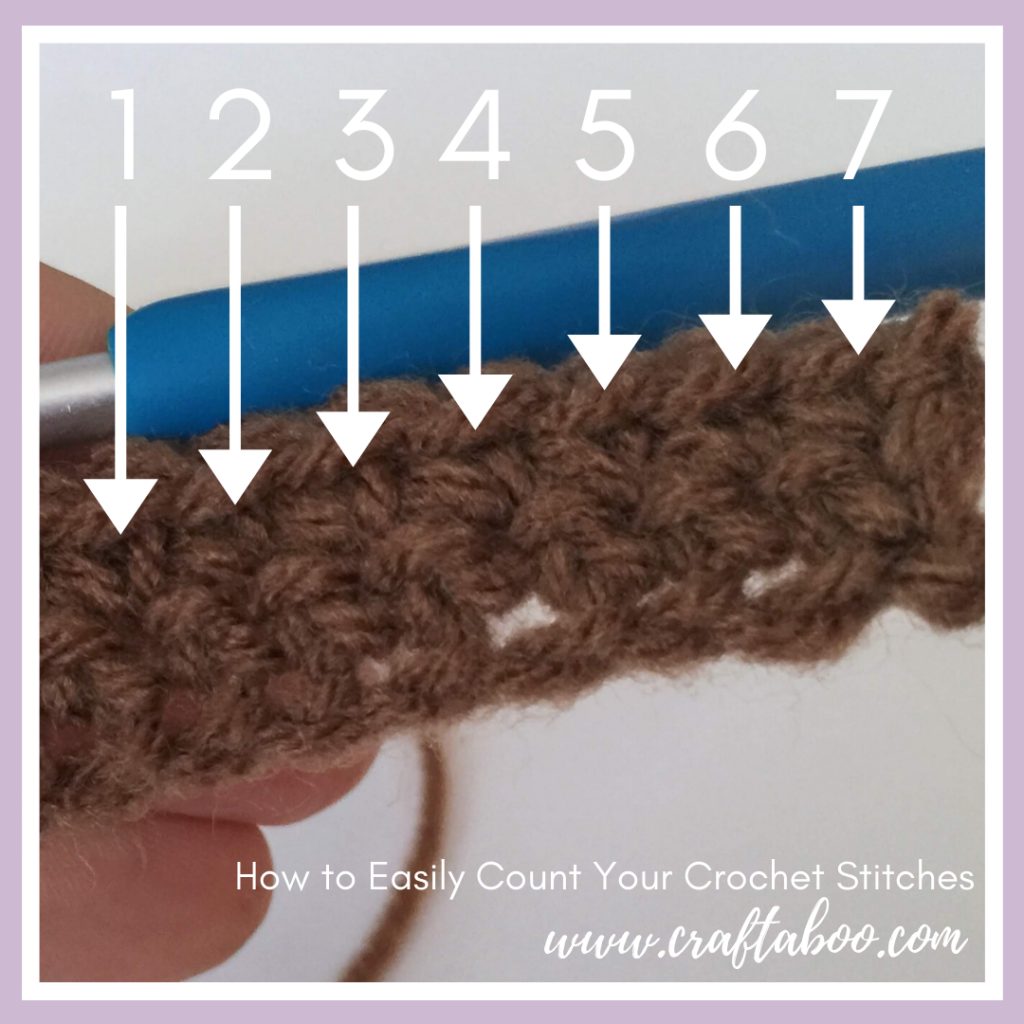
As a result of that, you will start counting your stitches with the very first single crochet you start in your row. Chain 1 does NOT count as a stitch.
If you look closely at the stitches each one looks like a tiny “V”. Each little “V” counts as one stitch. The diagram above shows how a row of single crochet stitches will appear in your work.
A Half Double Crochet is almost exactly the same.
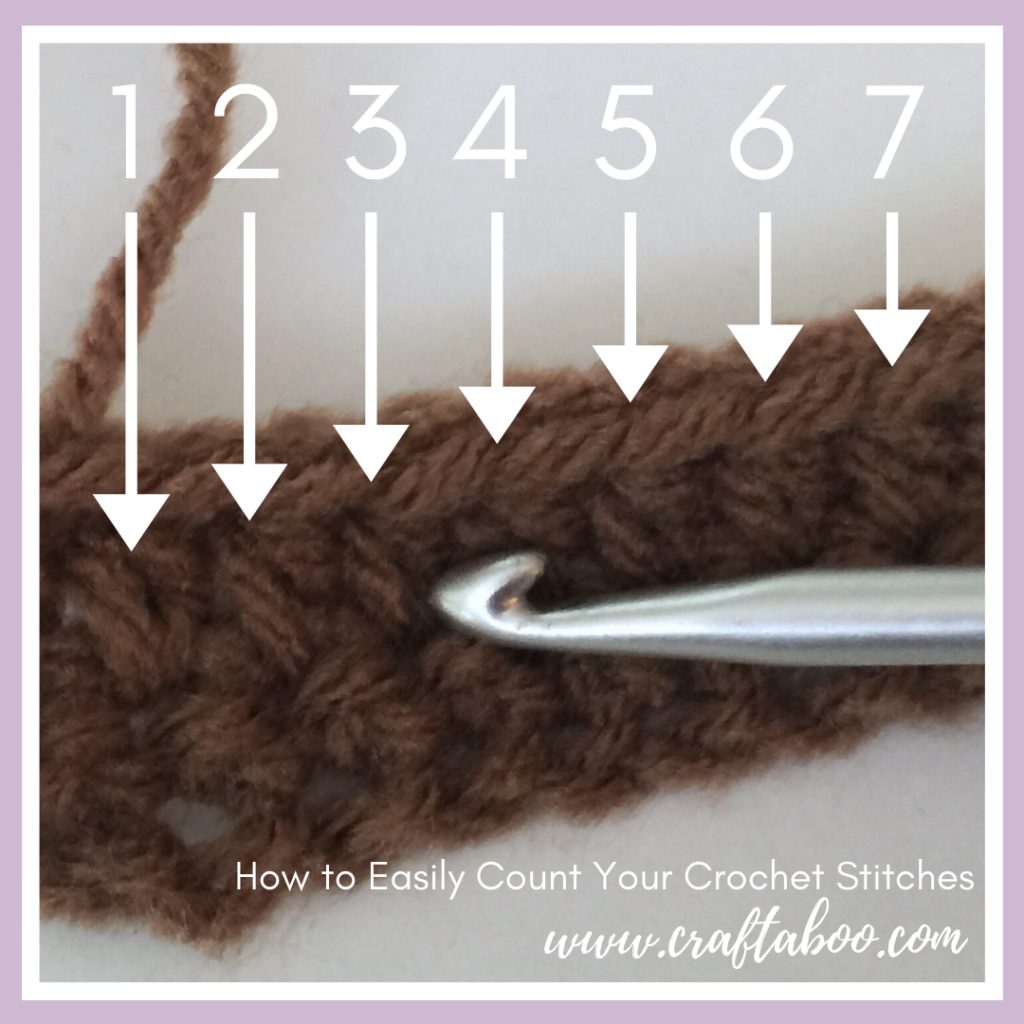
A half double crochet stitch begins with a chain 1 and turns just like the single crochet. And just like the single crochet, you do NOT count your chain 1 as a stitch. You will begin counting with the first stitch you make into your work. The only real difference is that it is just a little taller than the single crochet stitch.
Counting Double Crochet Stitches
When you start a row of double crochet, you begin with a chain 2 before turning your work.
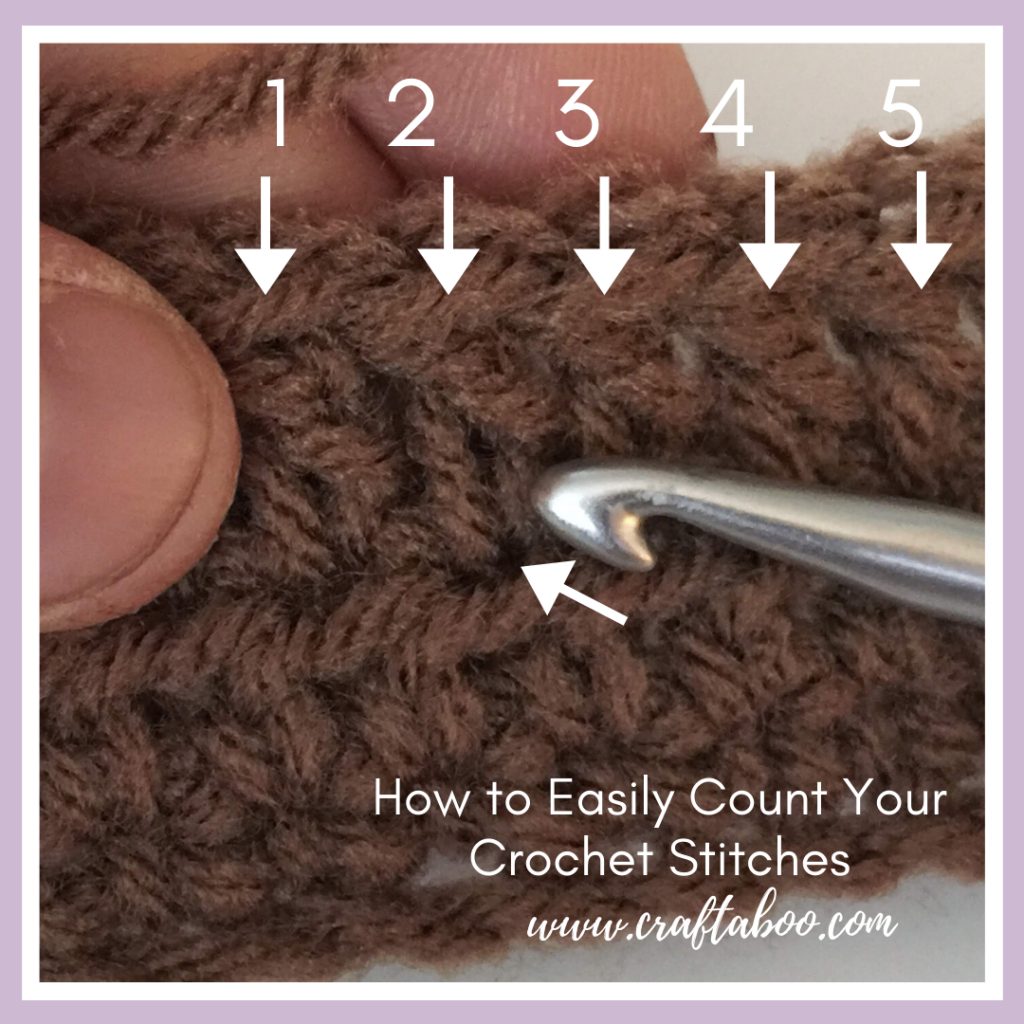
Again, the ch2 at the beginning of the work does NOT count as a stitch. (Unless the pattern you are following states otherwise. In that case, always abide by the pattern’s instructions.) You’ll begin counting your stitches with the first one you put into your work on the new row. The double crochet stitch is quite a bit taller than the single, and the half double, so it’s easier to see these stitches when counting.
Final Thoughts:
Counting stitches is one of those things that feels impossible at first and then becomes automatic.
Your brain needs to learn what to look for – those little V shapes at the top of each stitch. Once you train your eyes to see them, counting becomes second nature.
Quick reminders:
- Count as you go (way easier than recounting at the end)
- The turning chain counts as a stitch in most patterns
- Use stitch markers if you keep losing count
- Recount if something feels off – better to catch mistakes early
Pro tip: Count out loud or in your head as you work. It keeps you focused and you’ll catch mistakes in real time instead of three rows later.
Are you new to crochet and still figuring out the basics? Check out the Learn to Crochet hub for beginner tutorials. And for more tips that make crochet less frustrating, browse the Techniques & Tutorials section.
Got questions about counting stitches or a trick that works for you? Drop it in the comments.
Well, that’s a different way to do it. I always counted the V on the TOP of the stitches; it was easier for me to “see” and count! Learned something new today!
Kathy,
Wow, that’s great that you learned a new way to count them! I usually count the V ontop too, but sometimes it’s harder to see. Like with black yarn…
Thanks for stopping by!
Amber