

So listen, everyone makes mistakes when they’re learning to crochet. Hell, I still make them and I’ve been doing this for 20+ years.
The frustrating part? Sometimes you don’t even realize you’re making a mistake until you’re three rows in and suddenly your rectangle is a trapezoid. Or your stitch count is off and you have no idea where it went wrong.
Here are the 9 most common crochet mistakes beginners make, why they happen, and how to fix them. Once you know what to look for, they’re way easier to catch before they derail your whole project. (And most of your day)
Get my free beginner crochet guide (for when your stitches look wrong and you’re convinced you’re the problem – you’re not):
Heads up: My posts may contain affiliate links! If you buy something through one of those links, you won’t pay a penny more, but I’ll get a small commission, which helps keep the lights on! Thanks!
Crochet Mistake #1: Your project keeps shrinking
Reason: You’re not stitching into the final stitch of your row, causing your work to decrease by 1-2 stitches per row.
This is usually because the last stitch is hard to see – it blends in with the edge and you just… miss it. Happens to everyone.
Solution: Make sure you’re keeping an accurate stitch count as you go along. Count at the end of each row. If you’re consistently losing stitches, you’re probably skipping that last one. Use a stitch marker in the first and last stitch of the row if you need to. It helps you see exactly where to start and stop.
(Unless someone interrupts your count and you lose track. If this is the case, that person must be forced to clean the shower with a toothbrush! No, really! It’s the perfect punishment!)
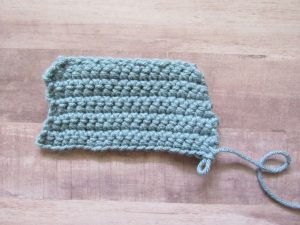
Crochet Mistake #2: Your Project Curls In On Itself
Your project starts to curl in on itself, so you’re not working in rows anymore – you’re accidentally making a tube.
Reason: Your tension needs some attention. (Hey, I rhymed!)
Solution: When you’re first learning, it’s hard to know what “right” tension even feels like or how to control it. The only real answer? Practice.
Pay attention to your tension as you’re working. Is your hand gripping the yarn so tight your fingers are cramping? Loosen up a bit and see if that helps. (Also: ouch. Stop holding the yarn like it owes you money.)
Try to stay consistent with whatever tension you started with. If you began working loose, keep it loose. If you started tight, stay tight. The curling happens when your tension changes midway through.
It evens out faster than you think – your hands will learn what feels right.
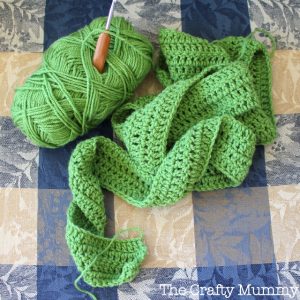
Crochet Mistake #3: Weird bumps on the side of your project
You end up with weird bumps on one side of your project and you have no idea where they came from or how they got there.
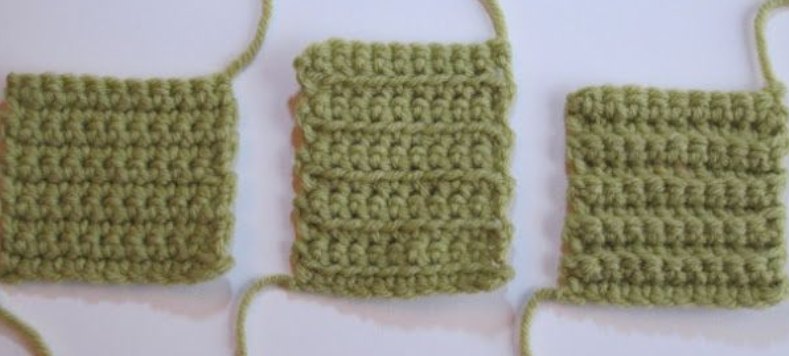
Reason: You’re only crocheting through one loop of the “V” that forms each stitch instead of both.
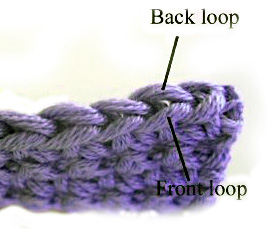
Solution: Pay close attention to where you’re inserting your hook in each stitch.
You should be going through both strands of yarn that form the top of the V – not just one side. When you only catch one loop, it creates those bumps on the other side.
Watch your hook placement for a few rows until it becomes automatic. Once you know what you’re looking for, it’s easy to fix.
Crochet Mistake #4: Confusing US and UK Terms
Look, crochet terminology between US and UK patterns is genuinely confusing.
A “double crochet” in the US is a “treble crochet” in the UK. Same name, completely different stitches. A “single crochet” in the US doesn’t even exist as a term in UK patterns – they call it a “double crochet.”
Who decided this was a good system? Because it wasn’t.
Reason: The UK and US use different names for the same stitches. It’s confusing as hell, and you won’t realize you’re using the wrong terminology until your project is way bigger or smaller than it should be.
Solution: Double and triple check your pattern to figure out which terminology it’s using – US or UK.
Most patterns will specify, but if they don’t, assume US terms (most online patterns use US). If your project is turning out way different than expected, check if you’re accidentally using the wrong terminology.
Use a conversion chart if you need to translate between the two. It helps. (Aske me how I know)
Crochet Mistake #5: Using Different Weight Yarn and Expecting the Same Results
This is one of the most confusing things when you’re first learning. I thought all yarn was basically the same, so I’d buy worsted weight when the pattern called for bulky, then wonder why my finished project was way smaller than it was supposed to be.

Reason: All yarns are not created equal. Yarn comes in different thicknesses (called “weights”), and they’re categorized from 0-7. Everything from lace (super thin) to jumbo (thick as hell).
If you use a different weight than the pattern calls for, your project will turn out a different size. Use thinner yarn? Smaller project. Use thicker yarn? Bigger project. This chart on Crafty Yarn Council’s website gives some good info.
Solution: Check what yarn weight your pattern recommends and use that weight.
Most beginner patterns use worsted weight (#4) because it’s versatile and easy to work with. If you’re not sure what weight you have, check the label – it’ll tell you.
Don’t try to substitute lace weight for bulky or vice versa. It won’t work. Your project will be a weird size and the fabric won’t look right.
Crochet Mistake #6: Using the Wrong Hook Size
This is an extremely common mistake, so don’t feel bad – you’re definitely not alone. Just like yarns aren’t all the same, neither are hooks.

Reason: Hooks come in different sizes and shapes. Everything from tiny lace hooks to huge jumbo ones.
Each hook is measured in millimeters based on the thickness of the shaft. Bigger hook = bigger stitches. Smaller hook = smaller stitches. Use the wrong size and your whole project will be off.
Solution: Check your pattern for the recommended hook size and use that size.
If you use something different, your project won’t turn out the right size – even if you’re using the correct yarn weight. The designer tested the pattern with a specific hook for a reason.
Not sure what size hook you have? Check the side of the hook – it should tell you the millimeter size (like 5.0mm or 6.0mm).
And if you’re confused about something in a pattern, reach out to the designer. Most of us (myself included) love hearing from people using our patterns and are happy to help.
Crochet Mistake #7: Not Reading the Whole Pattern First
I’ve gotten into so many sticky situations that I could have avoided if I’d just read the whole damn pattern before starting. I still hate doing it, but I do it anyway because it saves me from rage frogging the whole project four hours later.
Reason: You need to know what’s coming.
If you get halfway through and the pattern suddenly tells you to switch hook sizes or change colors, and you didn’t know that was coming, you might not have the right supplies ready. Or worse, you’ve already worked past where you were supposed to make the change.
Solution: Take a few minutes before you start to read through the entire pattern.
Look for:
- Special stitches you need to know
- Hook or yarn changes
- Color changes
- Any weird instructions that might trip you up
Front-loading that info into your brain saves you time (and frustration) later. I know it’s boring, but trust me – it’s worth it. (We’re also not going to talk about how many WIP’s I currently have waiting on me because of this very reason.)
Crochet Mistake #8: Not Leaving a Long Enough Tail
When you finish a project, most patterns tell you to leave a long tail of yarn. There’s a method to the madness.
Reason: You need that tail to secure your work so it doesn’t come undone.
If that tail is too short and it unravels, your entire project can come apart. Yes, the whole thing. And yes, you’ll cry. (Again, ask me how I know.)
Solution: Leave at least 6 inches of yarn at the end of your project. More if you’re going to use that tail for sewing (like attaching pieces together or sewing on eyes).
Even if you’re just weaving in the end, give yourself enough length to work with. Trying to thread a yarn needle with a 2-inch tail is miserable. And you will hate yourself, the designer, the project, and everyone you have ever loved.
Leave more than you think you need. You can always trim the excess after you’ve woven it in. Way easier than struggling with a tail that’s too short.
Crochet Mistake #9: Wrong Stitch Count on the First Row
You get to the second row and realize your stitch count is off. But you KNOW you chained the right number to start with. So what happened?
Reason: I promise, you’re not crazy, You just didn’t start your first stitch in the right chain.
Some stitches require you to skip chains at the beginning (like starting in the 3rd chain from the hook for double crochet). If you don’t skip the right number, your count will be off from the very beginning.
Solution: Double-check where the pattern tells you to place your first stitch.
Does it say “start in the 2nd chain from hook”? The 3rd? The 4th? Count carefully and make sure you’re starting in the right spot.
If you’re not sure how to count chains from the hook, look it up before you start. Getting that first stitch in the wrong place throws off your entire count, and you won’t realize it until you’re already several rows in.
Better to take an extra 30 seconds to verify you’re starting in the right place than to have to rip out 5 rows later.
Final Thoughts:
These mistakes are normal. Everyone makes them when they’re learning – dude, I still make some of them and I’ve been crocheting for 20+ years.
The difference between a frustrated beginner and someone who enjoys crocheting? Knowing what to look for so you can catch mistakes early instead of ripping out 10 rows in a rage at midnight.
Quick checklist to save yourself headaches:
- Count your stitches at the end of each row
- Pay attention to your tension (the yarn doesn’t owe you money, Sharon)
- Go through both loops of the stitch unless told otherwise
- Double-check you’re using US or UK terminology
- Use the yarn weight and hook size the pattern recommends
- Read the whole pattern before you start
- Leave long tails for weaving in
- Make sure you’re starting in the right chain
If you found this helpful and want more beginner tips, go check out the Learn to Crochet hub for more great beginner ideas. And if you’re looking for ways to make crochet easier, the Tips, Hacks & Wisdom section has shortcuts and troubleshooting advice that’ll save you time.
Got questions or keep making a mistake I didn’t cover? Drop it in the comments – I’m always happy to help troubleshoot.
Excellent information! Pinning!
Thank you for sharing with Creative Compulsions!
Michelle
https://mybijoulifeonline.com
Hi Michelle,
I’m so glad you enjoyed these tips! Thanks for the pin and for stopping by. Hope to see you again soon!
Amber